If you have ever stood over a drooping flower with a hose and wondered whether it needs more water or less, you are not alone. Learning how to water garden plants starts with a small change: check the growing conditions before following a calendar.
There is no single watering schedule for every flower bed. Newly planted perennials, established plants, and pots on a sunny patio can need very different care. This guide helps you decide when to check, what to look for, and how to record what works. The aim is a repeatable observation routine that adapts as your garden changes.
Start below the soil surface
A dry-looking surface does not tell you how much moisture is available around the roots. Move mulch aside and feel the soil beneath it. Check more than one spot, especially where the bed changes from sun to shade. Avoid damaging roots as you investigate.
For newly planted plants, check the original root ball as well as the surrounding soil. Those two materials can hold moisture differently. University of Minnesota Extension stresses that plants still establishing their roots need special attention during dry weather. A plant sold as drought-tolerant does not arrive with an established root system in your garden.
Write down what you find in plain language: dry and crumbly, slightly moist, or wet and sticky. These are observations, not a precise measurement. Combine them with the plant's documented moisture needs rather than treating one finger test as a rule for every species.
University of Minnesota Extension: gardening in extreme drought
Build a checking routine, not an automatic watering rule
Make a habit of visiting the garden at a time you can sustain. Look more often at new plantings, small pots, and areas exposed to drying conditions. Your reminder can say “check the bed” rather than “water the bed.”
Use this practical decision sequence:
- Identify the plant and its stage. Is it newly planted, established, or growing in a container? Check its moisture preferences.
- Check moisture where its roots are growing. Record the location and depth you checked so later comparisons mean something.
- Consider recent conditions. Note rainfall, heat, wind, and changes to sun exposure. Rainfall totals are clues, not proof that every root ball is moist.
- Choose an action. Water when your observations and the plant's needs support it. If the area is already wet, investigate drainage or other causes of stress before adding more.
- Recheck and learn. Note how the soil and plant respond. Adjust the next check instead of assuming today's interval will work all season.
For example, a newly planted perennial and an established clump beside it might look similar above ground while having very different access to moisture. Give each its own observation record until you understand the pattern.
Water the root area and check the result
Apply water to the soil around the plant rather than giving leaves a quick splash. Use a gentle flow that can soak in. If water runs across the surface, pause and let it infiltrate before continuing. A brief spray that only wets the top layer may not reach the roots that need it.
Morning is a useful default, particularly when overhead watering is necessary, because foliage has time to dry. It is not a reason to leave a plant with genuinely dry soil without water until tomorrow. University of Maryland Extension recommends watering near the base and keeping foliage dry where practical; prolonged leaf wetness can favor some plant diseases.
After watering, allow water to move into the soil and check whether it reached the intended area. Record the method and approximate amount or duration. Hose minutes are only useful for comparison if the flow and method stay reasonably consistent.
University of Maryland Extension: summer garden care
Treat containers as a separate watering zone
A pot has a limited volume of growing mix. Its roots cannot explore the surrounding ground for water. The plant's size, container size, potting mix, and weather all influence how quickly it dries.
Check outdoor containers daily while learning their pattern, especially in summer; checking daily does not mean watering every pot daily. For typical outdoor pots with drainage holes, water thoroughly when needed and let excess water drain. Do not leave ordinary pots standing in collected water. Self-watering planters have their own reservoir and overflow instructions.
If water races down the gap between very dry potting mix and the side of the pot, the center may still be dry. Rewet gradually and verify that the mix has absorbed water. University of Maryland's container guidance explains why regular moisture checks matter and why container watering frequency varies.
University of Maryland Extension: maintaining container plants
Do not diagnose a wilted plant by appearance alone
Wilting can occur when roots cannot supply enough water to the leaves, but it does not tell you why. Dry soil, root damage, and overly wet growing conditions can all complicate the picture. Check moisture and the planting conditions before reaching for the hose again.
If a plant is wilted while its root area remains wet, more water may make the problem worse. If the cause is unclear or symptoms persist, take photos and contact your local extension service with your observations. A record of recent watering and rain is more useful than guessing from one leaf.
Mulch can help conserve soil moisture and moderate soil temperatures. Keep it away from plant crowns and stems, and continue checking beneath it. Mulch reduces evaporation; it does not prove the roots have enough water.
Oregon State Extension: watering basics
Keep a short watering record
A useful log does not need to be complicated. Record the date, planting area, moisture observation, rainfall, what you did, and what you noticed afterward. Leave yourself a next-check reminder instead of locking in a universal schedule.
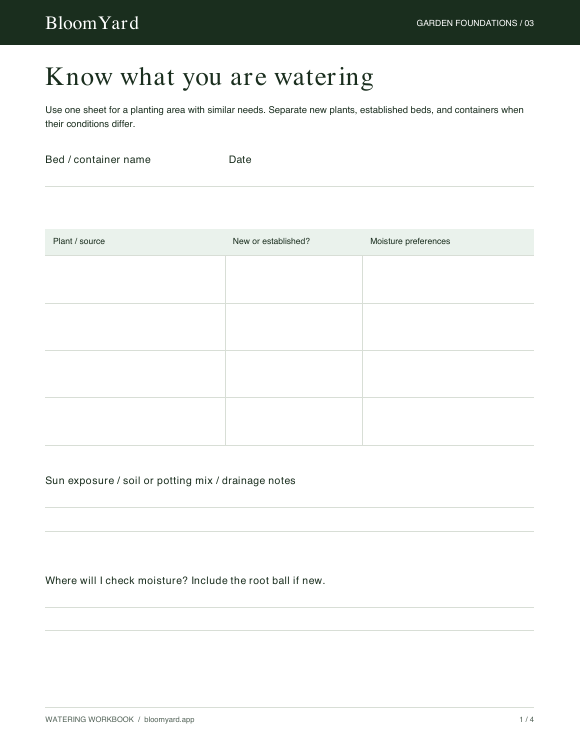
Our free Watering Workbook gives you a plant-and-site profile, a moisture and rainfall log, a watering-method check, and a simple review page. It helps you connect observations to decisions without promising a fixed number of minutes or gallons for every garden.
Get the free Watering Workbook. Pair it with the soil guide and sunlight guide to build a fuller picture of each bed. Check the plant, check the soil, and let those observations guide the next step.